
Grief and Loss: How to Navigate the Grieving Process Mindfully
Mindful Therapy for Grief and Loss
How to Navigate Grief and Loss Mindfully
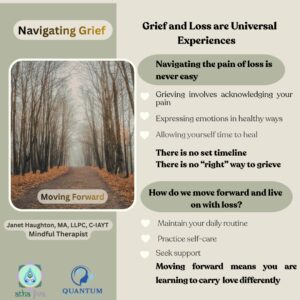
Loss and grief are universal human experiences. At some point in life, we all face the pain of losing someone we love. Grief can bring waves of emotions—sadness, confusion, anger, or longing—and many of my clients dealing with loss ask the same question:
How do I move forward and live with loss?
Healing from grief does not mean forgetting the person or experience you have lost. Instead, healing often involves taking small, compassionate steps that help you navigate the natural waves of grief while gradually rebuilding a sense of meaning and connection.
Healthy Ways to Navigate the Grieving Process
Grief looks different for everyone, but there are supportive practices that can help you move through the grieving process:
Acknowledge the Pain
- Allow yourself to experience the emotions that arise after loss. Sadness, anger, confusion, and even numbness are natural responses to grief.
Express Your Emotions
- Talking with trusted friends, family members, a therapist, or writing in a journal can help you process difficult feelings and make sense of your experience.
Practice Self-Care
- Grief can be physically and emotionally exhausting. Focus on simple foundations of wellness such as:
- Rest and sleep
- Nourishing food
- Gentle mindful movement
- Breathwork
- Moments of quiet reflection
Seek Support
- Grief can feel isolating, but you do not have to carry it alone. Lean on supportive communities such as family, friends, spiritual communities, support groups, or mental health professionals.
Be Patient With Yourself
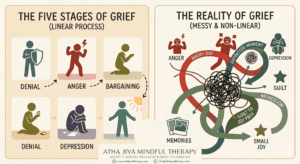
- Grief is not linear. Some days may feel manageable while others may feel overwhelming. Healing takes time, and everyone moves through grief at their own pace. Grief changes us, but love continues to live in our memories, our actions, and the ways we carry forward the people we have lost.
Common Myths About Grief
Many people struggle with grief because of misunderstandings about what grieving should look like. Dispelling these myths can help us approach grief with more compassion and realistic expectations.
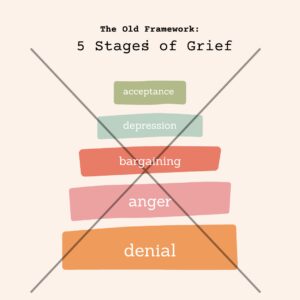
Myth #1: There Are Five Stages of Grief
Many people are familiar with the Kübler-Ross model, which describes five stages of grief:
-
- Denial
- Anger
- Bargaining
- Depression
- Acceptance
While these stages can describe emotions that sometimes arise after loss, modern research shows that grief does not follow a predictable or linear pattern. Not everyone experiences these stages, and they rarely occur in a specific order. Today, psychologists understand grief as a complex and deeply personal experience that unfolds differently for each person.
Myth #2: Grief Is a Disease That Needs to Be Cured
Grief is not an illness. It is a natural human response to loss. Healing from grief involves learning how to live with the loss while gradually adapting to life again.
Myth #3: Moving Forward Means Forgetting the Person You Lost
Finding moments of happiness or building new relationships does not mean that love or memory disappears. It means you are learning to carry that love in a new way.
Myth #4: Time Heals All Wounds
Time alone does not heal grief. Healing comes from how we process our emotions and integrate the loss into our lives.
Myth #5: Strong People Do Not Cry
Expressing emotions is not weakness—it is a sign of emotional health. People grieve in many ways, and not everyone expresses grief through tears.
Myth #6: Grief Only Happens After Death
Grief can arise from many types of loss, including
- Divorce or relationship changes
- job loss
- Health challenges
- Major life transitions
- Loss of identity or lifestyle
Myth #7: The Goal Is to “Get Over It”
Grief does not have a finish line. The goal is not to forget the loss, but to learn how to live alongside it.
Myth #8: Staying Busy Helps You Avoid Grief
Distraction can temporarily numb emotional pain, but unprocessed grief often resurfaces later. Allowing yourself to feel and process emotions is an important part of healing.
When Does Grief Become Overwhelming?
Grief can feel intense, especially after a significant loss. However, if grief begins to severely affect your ability to function in daily life, it may be helpful to seek additional support.
You may want to consider speaking with a mental health professional if you experience:
- Persistent emotional distress that does not improve with time
- Difficulty maintaining relationships
- Inability to perform daily responsibilities
- Severe isolation or withdrawal
Seeking support is not a sign of weakness—it is an important step toward healing.
Understanding Prolonged Grief Disorder
In recent years, the mental health field has recognized a condition called Prolonged Grief Disorder, now included in the DSM-5. This condition occurs when grief remains extremely intense and persistent for an extended period, significantly interfering with a person’s ability to function in everyday life. Individuals experiencing prolonged grief may feel stuck in deep mourning and may struggle with daily routines, relationships, or responsibilities.
It is important to note that only a small percentage of people experience prolonged grief, often after profound losses such as the death of a life partner or child. Grief itself is a natural human experience. However, when grief begins to feel overwhelming, isolating, or paralyzing, professional support can help guide the healing process.

Mindful Therapy for Grief and Loss
Mindful Cognitive Behavioural Therapy offers a compassionate, holistic approach to supporting individuals through grief. This approach integrates evidence-based Mental Health Counselling with Mindfulness, Breathwork, and gentle mind-body practices to help regulate the nervous system and create space for emotional healing.
Rather than trying to “fix” grief, Mindful Therapy allows individuals to experience their emotions safely and with self-compassion.
Body: Somatic Awareness and Gentle Movement
Grief often lives not only in the mind but also in the body and can manifest physically as tightness, heaviness, fatigue, or discomfort. Mindful therapy encourages somatic awareness, helping individuals notice physical sensations without judgment. Gentle movements, stretching, or restorative movement practices can help release stored tension.
Breath: Nervous System Regulation
Breathwork practices help to regulate the nervous system and gently shift the body out of a fight-or-flight response. Simple breathing techniques can create a sense of grounding and calm during emotionally overwhelming moments.
Mind: Mindfulness and Self-Compassion
Mindfulness invites us to acknowledge difficult emotions without judgment. Instead of resisting or suppressing grief, mindful therapy encourages individuals to hold their emotions with patience, compassion, and curiosity.
These mind-body practices helps to regulate stress, support emotional release, and create space for healing.
 Healing does not mean forgetting…
It means learning to carry love and memories forward with compassion, resilience, and balance.